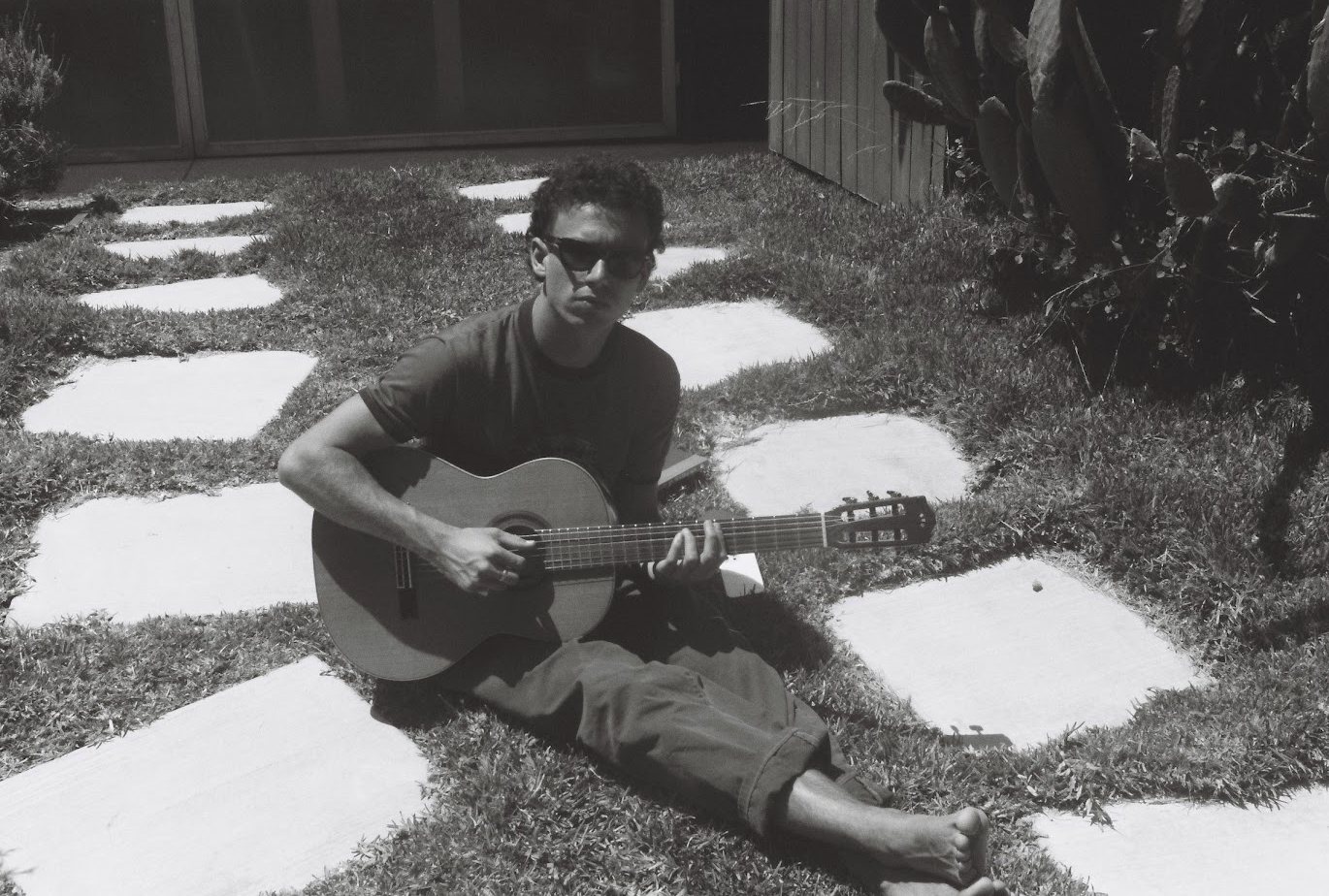
Founder & CEO — Mementōte, Inc.
G La Londe V
Building Time Machine: recordings that can only ever be played back where they were made.
mementote.co
Building Time Machine: recordings that can only ever be played back where they were made.
mementote.co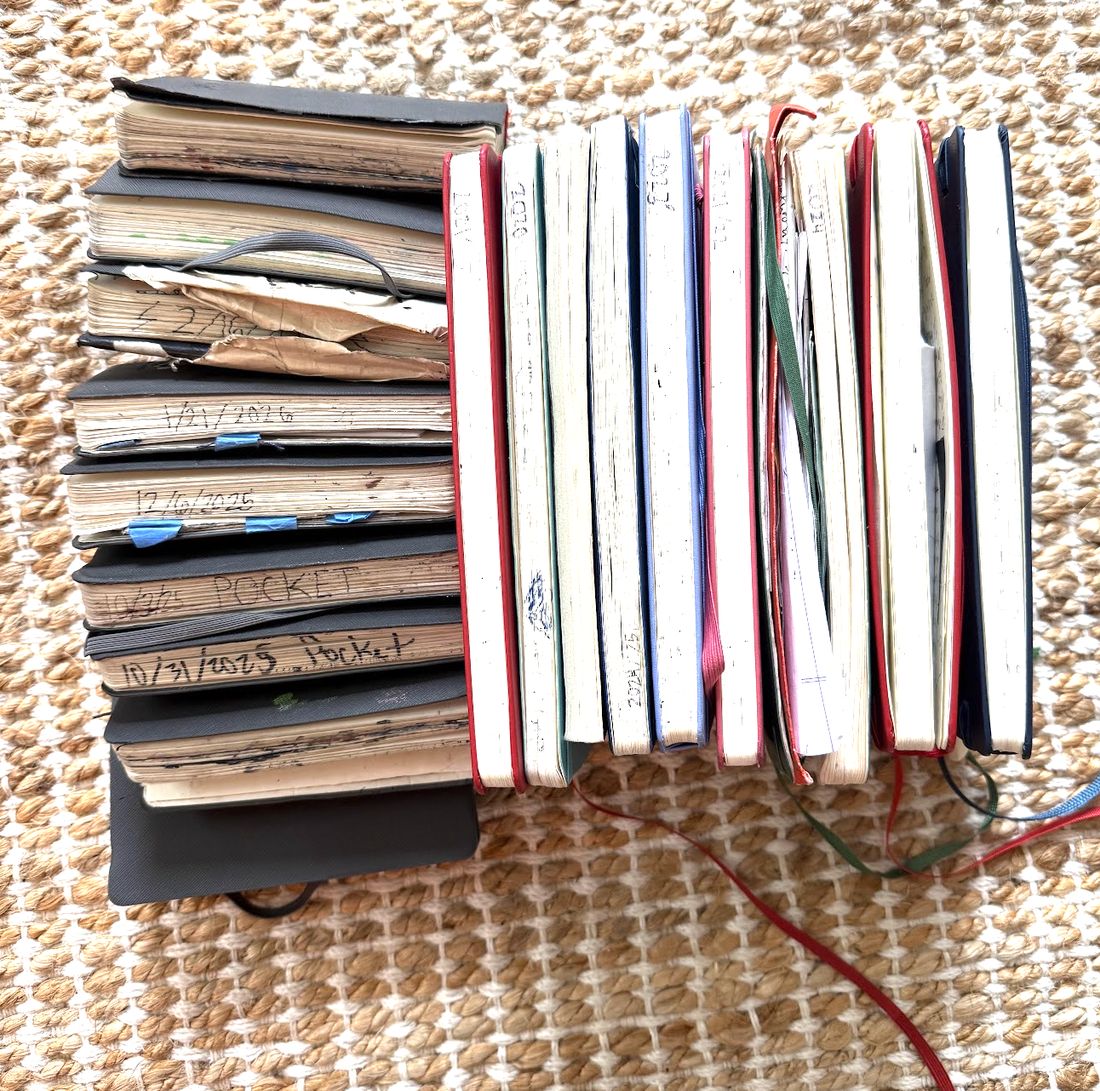
The idea came out of journaling. Not from a market gap — from noticing that a page written in one place read differently when you came back and read it standing there.
That question became formal study. At Berkeley I took a BA in Philosophy and Cognitive Science with a certificate in Generative AI, and turned most of it toward one problem: how an external recording changes the brain that made it. I held a fellowship with the Greater Good Science Center under Lou Deringer, Dacher Keltner, and Gehl Architects, working on what I called recursive reflection. Coursework became Time Machine research, usually alongside the professors whose work it drew on.
A space is just coordinates. A place is a space someone has lived in.
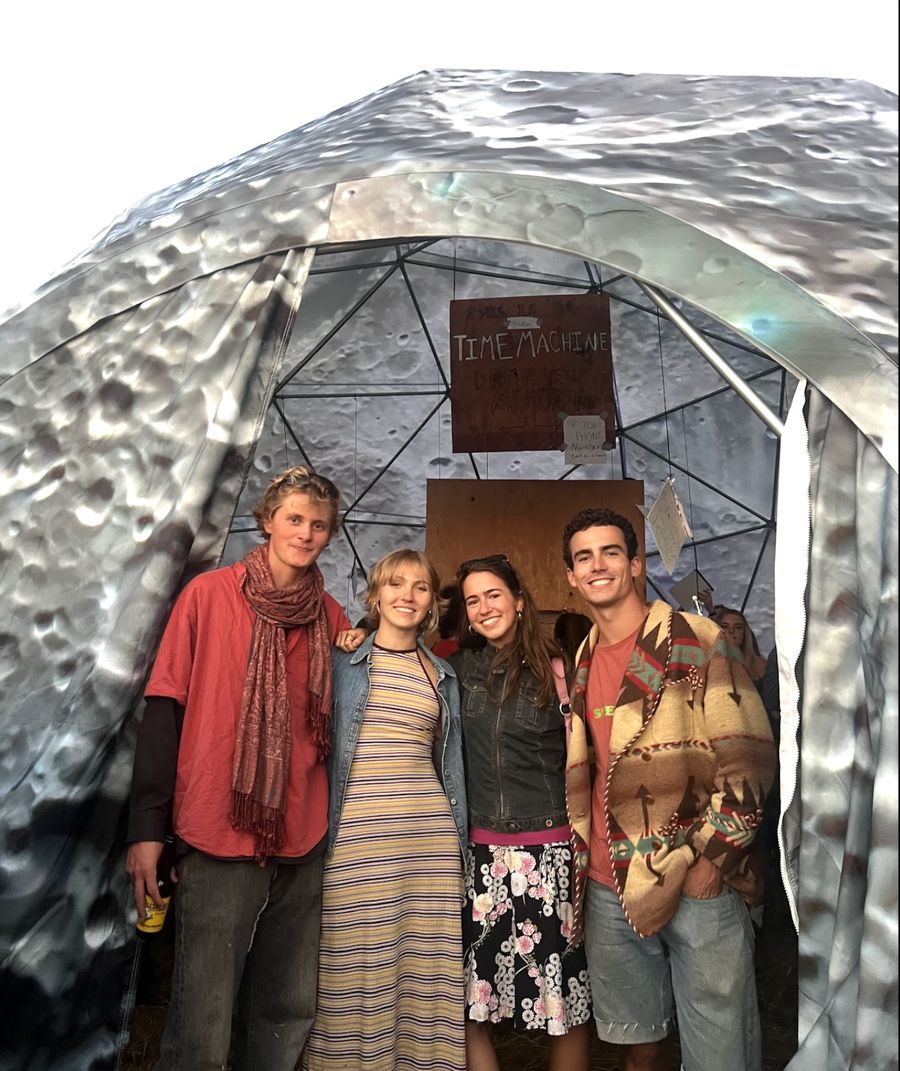
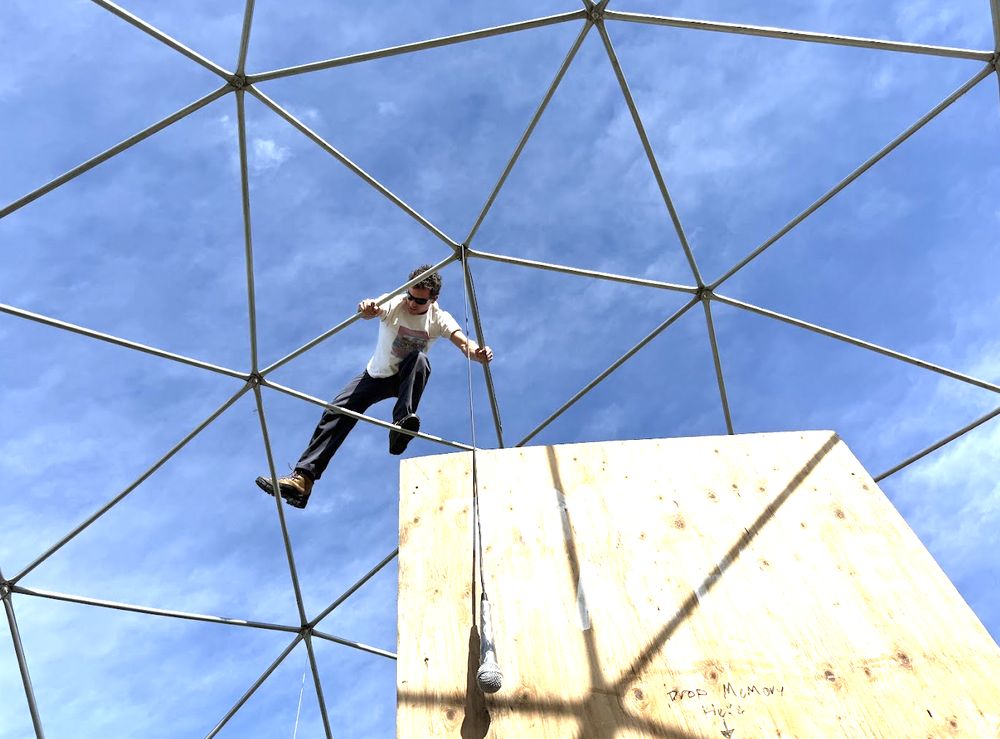
The rest of it was built in public — installations, band shows, a Time Machine guitar vocoder, parties where the whole room left something behind. Grizzly Peak. Memorial Glade. Phi Psi Surfrider. Kibera. All of the visual, written, and audio work I make, I make as Time Machines, and I leave them where they were made.
I've been full-time since graduating. I write the code — iOS, web, functions, and the tmkit SDK — almost entirely with Claude Code.
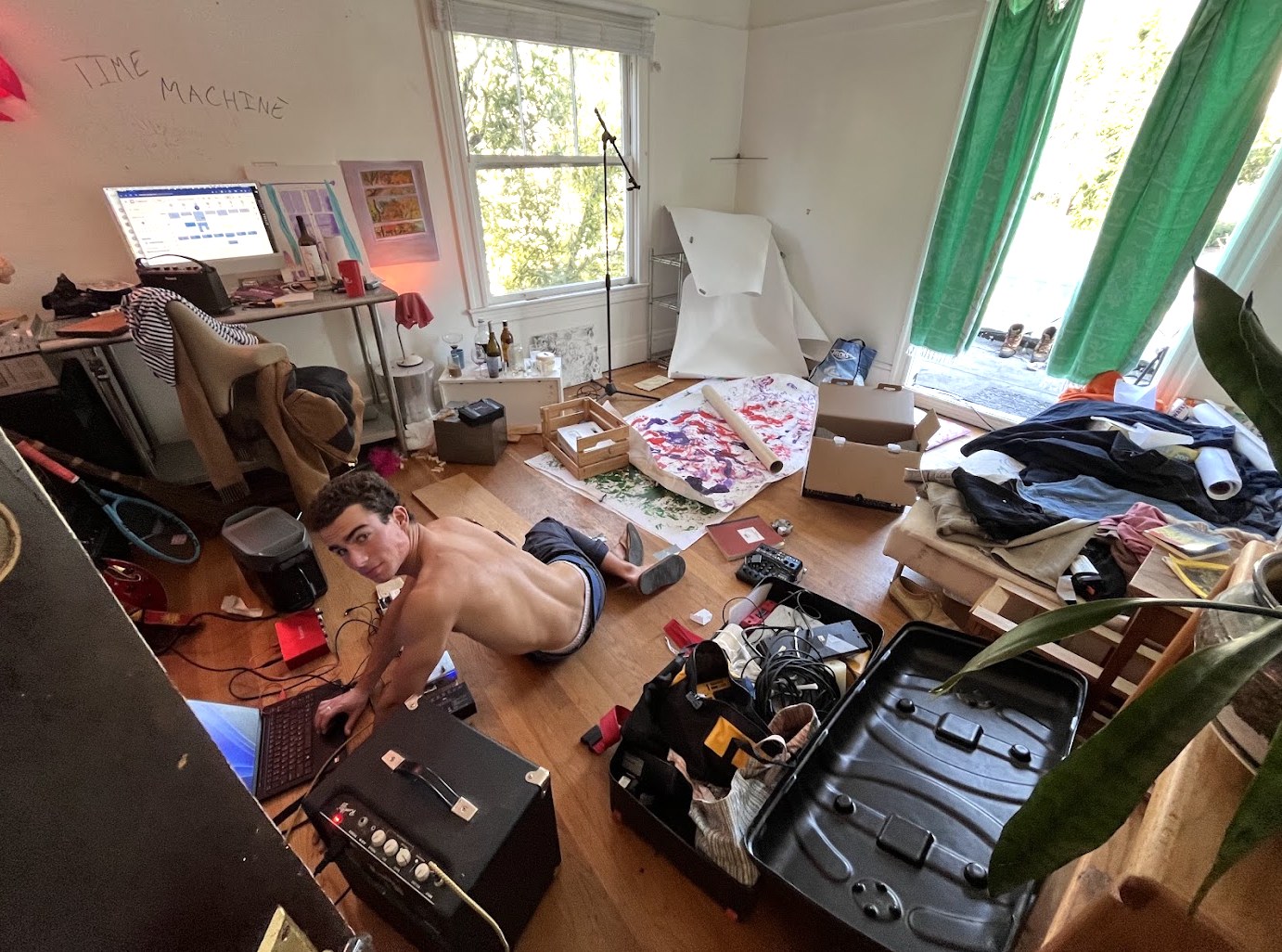
The room where it got built. Written on the wall before it was written in Swift.